Carbon‑conscious technology directly supports all three.
The hidden carbon cost of “new”
Most of a device’s carbon footprint is created before it ever reaches a classroom — through raw material extraction, manufacturing, assembly, packaging, and transport. For example, Lenovo’s lifecycle assessment for a ThinkPad L13 Yoga Gen 2 estimates a footprint of around 495 kg CO₂e for a single device. This means that even energy‑efficient new devices carry a heavy upfront environmental cost.
Refurbishment changes the equation
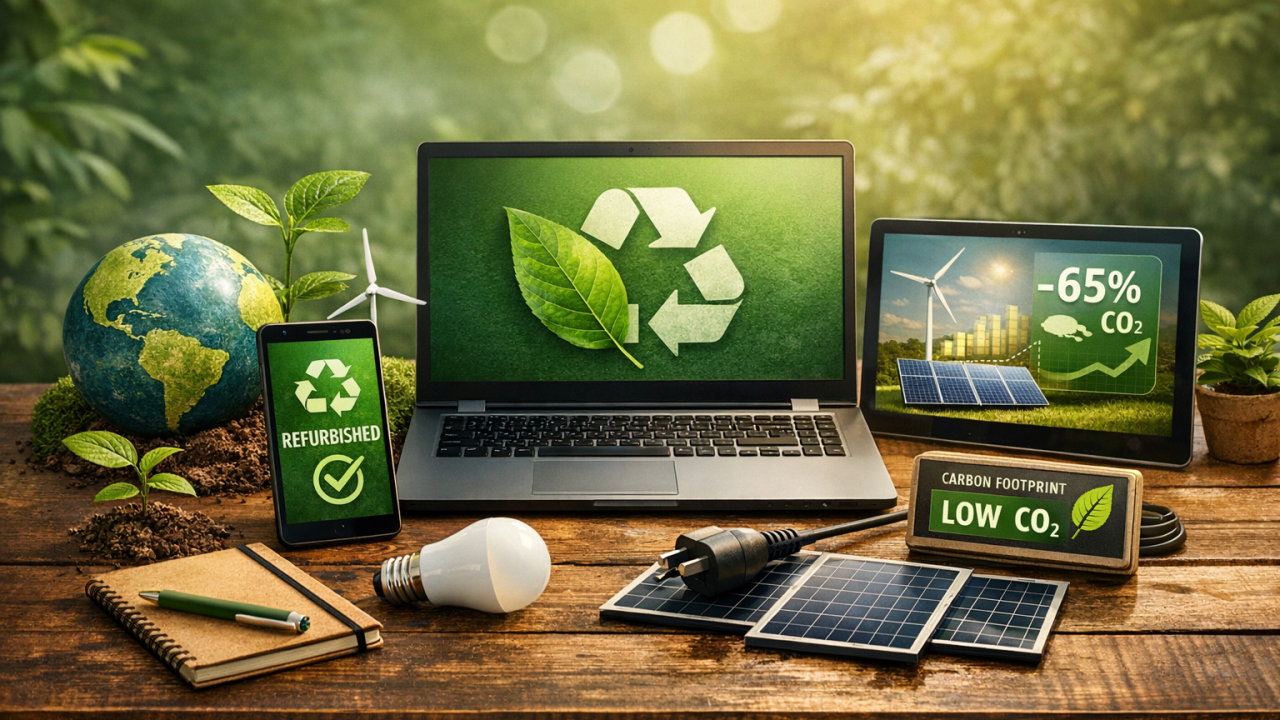
Choosing high‑quality refurbished devices avoids triggering another round of manufacturing emissions. The carbon‑heavy part has already happened, so extending the life of existing hardware is one of the most impactful sustainability decisions a school can make. This is circular‑economy thinking in action, and it’s rapidly becoming the direction of travel for the sector.
Sustainability without compromise
Modern refurbishment processes are rigorous. Devices undergo engineering checks, component testing, cosmetic restoration, and quality assurance to a standard that feels “like new.” In some programmes, devices go through 66‑point inspections to ensure reliability and classroom‑readiness. Schools no longer have to choose between sustainability and performance.
Lower Carbon Footprint, Lower Costs
Carbon‑conscious devices don’t just reduce emissions, they also reduce operational costs.
Energy‑efficient hardware lowers electricity usage.
Refurbished devices cost significantly less upfront than new ones.
Cloud‑based learning reduces the need for physical infrastructure and paper, cutting both carbon and spending.
Programmes like HP’s Carbon Neutral Computing Services provide transparent sustainability reporting, helping institutions track and evidence their impact.
For budget‑pressured schools, this combination of savings and sustainability is powerful.
Better Learning, Greener Outcomes
Carbon‑conscious devices support modern pedagogy while modelling environmental responsibility for students. Paperless workflows reduce waste and streamline learning. Some schools have cut paper use by up to 80% through digital assessments and e‑textbooks. Remote and hybrid learning reduce travel‑related emissions and improve accessibility. Cloud‑hosted platforms minimise the need for energy‑intensive on‑site servers.
This aligns with national strategies, such as the UK’s sustainability and climate‑change framework, which emphasises reducing the education sector’s environmental footprint while preparing learners for a green economy.
The Way Forward
Carbon‑conscious devices are no longer a “nice to have.” They are becoming the default expectation for forward‑thinking education providers. By embracing refurbished hardware schools can: cut their carbon footprint, save money, improve digital equity, support national climate goals, model environmental responsibility for students
In a world where sustainability is now a core part of educational strategy, carbon‑conscious technology isn’t just the future — it’s the new standard.